






















































Christmas in Lagos delivers a delightful festive romp set against the dazzling backdrop of Nigeria’s most populous city during its famous “Detty December” season. Directed by Jadesola Osiberu, known for her modern Nollywood hits such as Isoken (2017) and Sugar Rush (2019), this film is a compelling mix of romance, comedy, and vibrant visuals—perfect for the holidays.
Plot and Setting
The story revolves around Fiyin (Teniola Aladese), a bubbly young Lagosian who firmly believes her best friend Elo is her soul mate—until he returns from abroad with a secret fiancée named Yagazie. Adding to the mix are family, friends, and a host of unexpected encounters that bring the city of Lagos to life during the most festive time of the year.
From the moment Fiyin hops into her bold red convertible at dawn and journeys across the Third Mainland Bridge, we’re treated to the signature chaos and charm of Lagos traffic. Hawkers offering everything from cold drinks to live chickens are everywhere, and Fiyin’s comedic altercation with a chicken-wielding vendor is an early sign that this film knows how to blend local flavour with playful storytelling. The sense of familiarity and homecoming is particularly strong as we watch Fiyin pick up her cousin Ivie (Rayxia Ojo) at the airport, amid honking cars and lively city chatter.
Characters and Performances
Teniola Aladese (Fiyin) shines with her natural blend of sassy confidence and genuine vulnerability. She captures the essence of a Lagos socialite trying to piece her life (and love) together during the holiday season. Her chemistry with both Ivie and Elo feels warm and authentic—unforced and delightfully humorous.
Shalom C. Obiago (Elo) is caught between old ties and new love, between staying loyal to the fiancée, Yagazie and reuniting with the best friend who once made him believe in joy. Yagazie channels a polished intellect and grace that challenge Fiyin’s sense of security. She’s independent, driven, and equally smitten with Elo—qualities that paint her as neither a villain nor a saint, but a woman trying to find her own happiness.
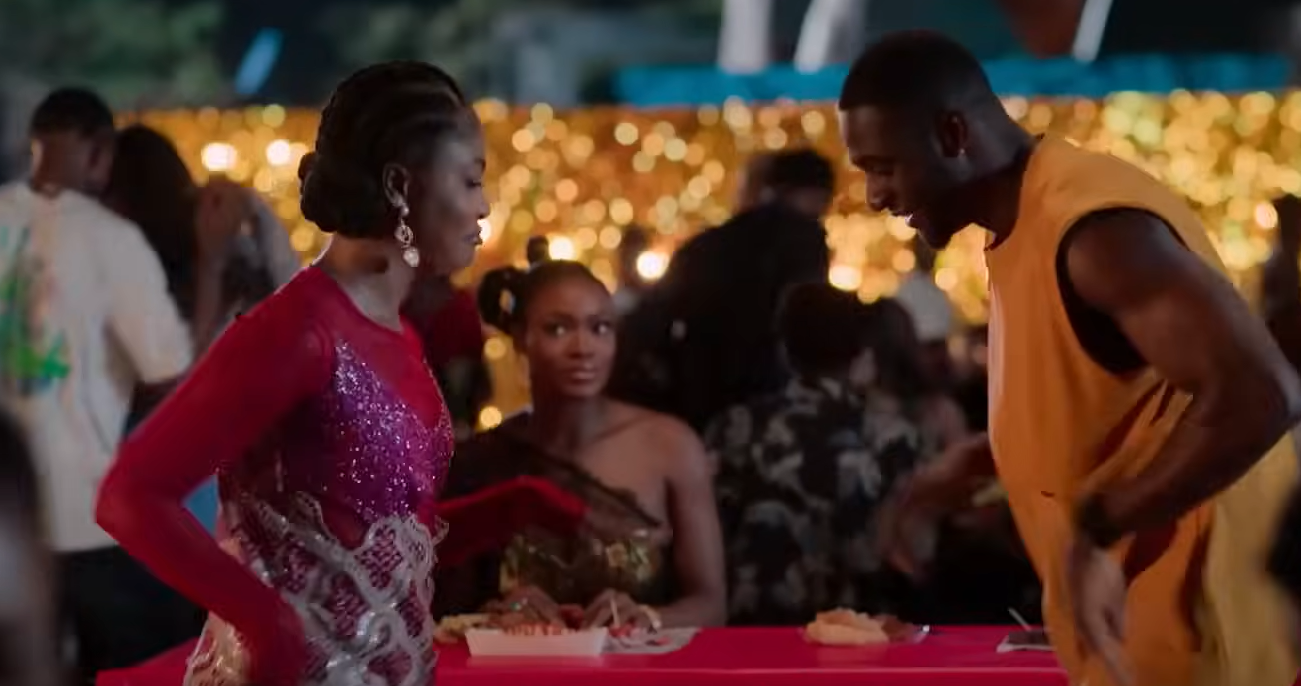
Rayxia Ojo (Ivie) brings an engaging screen presence as Fiyin’s London-based cousin. Ivie’s wide-eyed fascination with Lagos, coupled with her immediate spark with a delivery-guy-by-day and guitarist-by-night named Ajani (Ladipoe), is endearing. Their romance demonstrates a charming crossover between diaspora sensibilities and local hustle as the London girl and the Lagos boy.

Shaffy Bello (Gbemi) delivers regal poise as Fiyin’s widowed mother. Whether elegantly gliding out of a Rolls-Royce or calmly taking control of a tense situation, she commands attention with her trademark expressive style. Her comedic timing alongside Richard Mofe-Damijo (RMD) is a highlight, especially in the scenes where her driver and RMD clash over their respective cars.
Richard Mofe-Damijo (Zak) is characteristically suave, bringing his classic Nollywood star power to the role of Gbemi’s old flame. The pair’s rekindled romance underscores that there’s no age limit on second chances in love. His playful jab—“small boy”—when he spots Gbemi’s current suitor is classic RMD, drawing laughs while exuding a confident charm.

Wale Ojo (Toye): a well-known British-Nigerian actor (Phone Swap (2012), The CEO (2016)), holds his own amid these industry heavyweights. His subtle but effective performance as Gbemi’s polite and somewhat reserved suitor contrasts beautifully with the larger-than-life persona of RMD’s Zak. Ojo portrays the quintessential “gentleman friend,” demonstrating patience, respect, and genuine affection for Gbemi. Wale Ojo contrasts RMD’s grandiose energy with a calmer, more understated approach. His quiet devotion to Gbemi is evident in every polite smile and considerate gesture, raising an age-old question: does passion outshine stability, or can the two coexist?
The comedic tension between him and Zak—two men at odds over their beloved Gbemi—infuses the film with lively banter and an extra dose of holiday mischief. Despite being outmanoeuvred in dramatic fashion, he remains dignified and likeable, offering viewers a warm, more understated brand of romance.
Cinematography and Visuals
From sweeping shots of Lagos’ skyline at dawn to the neon-lit drone footage capturing the city’s nightlife, the film’s cinematography stands out as one of its strongest suits. Carefully framed angles highlight both the bustle of the roads by day and the magical glimmer of high-rise buildings by night.
- Drone Shots: Spectacular overhead views of Lagos Island’s coastline and Victoria Island’s glitzy skyline appear intermittently, underscoring the scope and beauty of the metropolis.
- Night Scenes: The glow of streetlamps, colourful club lights, and the shimmering lagoon convey an almost dreamy quality, putting the city’s famed nightlife front and centre.
- Close-ups & Angles: The film employs tight close-ups during key romantic or comedic moments—like Fiyin’s banter with hawkers or Gbemi’s sudden run-in with Zak in the Rolls-Royce. This approach heightens tension, comedy, and emotional impact without ever feeling intrusive or excessive.



Themes and Highlights
- Romance Across Generations: By exploring love stories from Fiyin and Elo’s youthful longing to Gbemi and Zak’s mature rekindling, the film underscores that the quest for companionship and joy unites all ages.
- Female Friendship & Empowerment: The bond between Fiyin and Ivie is genuine and uplifting. Even as Fiyin battles bouts of insecurity when comparing herself to Yagazie the “epidemiologist”. Watching her interact with Fiyin offers comedic friction, especially when their conversation veers into personal achievements or cultural nuances, highlighting the differences between them.
- Socio-Economic Diversity: The storyline smoothly accommodates couples from different social backgrounds, from lavish trips on private jets to Okada rides(commercial motorcycles) across Eko brige. It’s a testament to the film’s inclusive portrayal of life and love in Lagos.
- Cultural Nostalgia: From the Yoruba and Igbo greetings sprinkled throughout to the cameo references to The Shrine (Fela Kuti’s legendary music venue), the film celebrates Nigeria’s cultural ethos in full force. The characters slip easily between English and local languages, bridging tradition and modernity in every scene. This cultural pride extends to the phenomenon known as IJGB (I just got back)—a term Nigerians affectionately use to describe friends and family returning from abroad, often around the festive season. These “IJGBs” bring their own flair: foreign accents, trendy outfits, and a penchant for comparing local norms to their experiences overseas. The soundtrack features everything from Bright Chimezie’s highlife tunes to Flavour’s “Ashawo” and D’banj’s “Fall in Love,” painting a lively picture of Detty December’s joyous musical mix. Interweaved with modern club sounds, paid homage to Nigerian music’s expansive legacy.
- Exploration of Grief: While the movie bubbles with festive cheer, it doesn’t sidestep the emotional weight of loss. Elo’s unresolved grief over his sister’s passing subtly drives his need for connection, leading to tense moments and heartfelt conversations with his parents, an aspect of nigeria culture that is rarely addressed. In a parallel thread, yagazie’s loss of both her parents and Gbemi’s widowhood underscores how grief evolves over time. The film allows its characters to feel sorrow without sinking into it—a delicate balancing act that shows how love and loss can coexist during the holidays

Overall Impression
Few holiday films capture the pulse of Lagos like Christmas in Lagos. Director Jadesola Osiberu uses lavish sets, a multifaceted cast, and a treasure trove of Nigerian culture to showcase every corner of Lagos—its glitzy Island side, chaotic traffic, lively Mainland nightlife, and everything in between. By weaving together multiple romances, family tensions, and comedic twists, she creates a festive tapestry that underscores the city’s reputation as a place of endless possibilities.
The cinematography complements the narrative with sweeping vistas and beautifully framed shots that seamlessly transport viewers to the middle of Lagos’ iconic traffic and vibrant nightlife. For anyone missing the distinct sounds, sights, and smells of the city—or curious about exploring it for the first time—this film is a love letter to a Lagos brimming with promise and passion.
Watch it here on Amazon Prime. You’ll laugh at the playful jabs and comedic road encounters, swoon over rekindled affections and new loves, and feel your heart race as the drone shots dive across Lagos’ sparkling skyline. Whether you’re Nigerian or simply curious about the Nollywood film scene, Christmas in Lagos invites you to experience the electric spirit of Detty December—one romance, one adventure, and one dazzling shot at a time.
In short, Christmas in Lagos is a triumphant, good-spirited holiday film: a shining example of the best modern Nollywood has to offer. Get ready to be charmed, entertained, and perhaps even inspired to book a trip to Lagos once the credits roll.
Have you seen Christmas In Lagos? Let me know what you think in the comments!
As always, thank you for reading!
***
Liked this post? Do share it on your social media wall, timeline or feed.
Want blog updates and promotions in your inbox?
Sign Up Now
